



firing countermeasurers
As many action-adventure films buffs know, when a missile is fired, the attack can sometimes be foiled by launching counter-measures. Well, just like the movies, digital photography is experiencing a new wave of attacks and corresponding counter maneuvers. The attacks are perpetrated by a new breed of “perv-a-razzis” (perverts with cameras) armed with their mobile cameras. The question is, can law-enforcement, legislatures, and electronics manufacturers, keep one step ahead of lewd intrusions? The answer is “probably not.”
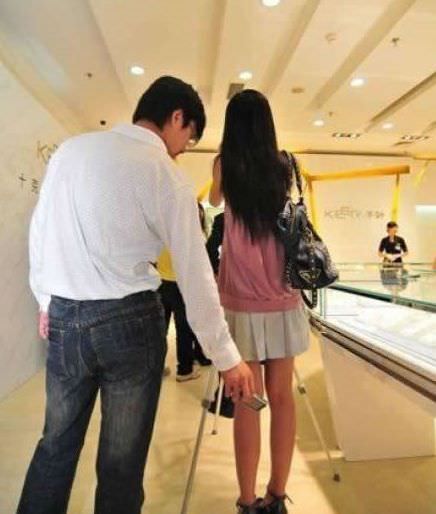 Voyeurism is alive and clicking. And in today’s age of ubiquitous smartphones, integrated with high resolution digital cameras, the naughty boys are becoming ever more brazen. Mobile cameras are often used to capture compromising photos of unsuspecting females. Shopping malls, airports and subways are favored stalking grounds of the relentless perva-a-razzi. Their ingenuity is never-ending. It seems every trick has been used … cellphone cameras strapped to shoes, hidden in gym-bags, and iPhones concealed in backpacks with little camera peep-holes.
No where has the mobile camera “pervography” problem received more publicity than in Japan. According to the National Police Agency, 1,741 cases of illicit photography were reported nationwide last year (2011), a 60% rise from 2006 data.
 The problem is so acute that many subway stations in Japan now display warning signs alerting riders to be wary of smartphone toting men who carelessly (*ahem* intentionally) drop their camera-phones below skirts, or down blouses, where they shoot compromising close-up photos or videos of young victims.
While it may be popular to pick on brazen adolescent Japanese males (the posterboys of upskirting) the problem is by no means confined to the Land of the Rising Sun. Arrests have been made in dozens of countries for illicit “voyeurography.” There was even one arrest of a US Airways pilot who was caught using his cellphone to snap a photo under a teenager’s skirt at the Philadelphia International Airport. The pilot pleaded guilty to invasion of privacy. Sadly, there have been many others (mostly male, yet all ages, races and cultures) who’ve been caught in the act and managed to avoid consequences.
 The rise of digital photography coupled with the phenomena of taking compromising candids, caught law enforcement agencies and many courts, off guard. Taking “peek-a-booty” candids in public, was perfectly legal in many countries, and before the explosion in Internet photo/video postings, the problem was hidden and the outrage was not so palpable.
There were in fact several early cases where voyeur photographers were let go without punishment due to legal technicalities. In 2000, a young Seattle woman and her boyfriend chased down and caught a man who was shooting video under her skirt at a festival event. The perv-a-razzi, Richard Sorrells, was arrested and convicted of voyeurism. But his conviction was overturned in 2002 by the State Supreme Court. The Court ruled that Sorrells’ actions while “disgusting and reprehensible,” were not against the law. At the time, Washington Sate’s voyeurism statutes did not protect people from being filmed in any manner when in a “public” place where there is “no reasonable expectation of privacy.” Yikes! Thankfully, Washington State’s laws were changed in 2003.
Over the last decade, like Washington State, many countries, states and jurisdictions, have updated their voyeurism laws and closed legal loop-holes. California now has one of the most rigorous privacy statutes, which covers “high tech” intrusions and forbids the attempt to capture and/or distribute compromising photos/videos made “in a manner that is offensive to a reasonable person” or taken “under and through the clothing” or with “a visual or auditory enhancing device.”
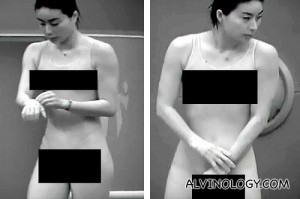
Guo Jingjing (郭晶晶) Transparent Swimsuit Infrared Video Scandal
You might ask why the legal phrasing “though the clothing” was necessary? Well, the commercial availability of infrared “night vision” filters, along with some low-tech jerry rigging of high definition photo and video cameras, has enabled the capture of x-ray (Superman vision) images of fully clothed persons. Fabrics display quite differently under infrared. Some clothing is more opaque and yet other fabrics become virtually see-through under night vision lenses. This revelation led to shock and outrage by many who justifiably thought that they had properly covered up.
The infrared “see everything” photo/video concerns, has led to extra vigilance by parents, and most particularly when at the beach with their kids or when attending youth swim meets. It was discovered that tight fitting Lyrca swimsuits become fully transparent by way of infrared lenses. Camera makers reacted to the “thinly veiled” infrared criticism by modifying internal electronics to prevent their cameras from producing night-vision style voyeuristic viewing in bright sunlight conditions. However, these “counter-measures” can be overridden by determined pervographers who have a bit of tech savvy. For understandable reasons, we will not uncover these counter-counter-measures in this article.
Back to Japan … One of the counter-measures deployed by Apple was to maintain the iPhone camera’s audible shutter (clicking) noise, regardless of any iPhone setting selected by the user. For iPhones sold in Japan by Softbank and by KDDI, you cannot mute the shutter noise. This makes it slightly more difficult for voyeurs to discreetly take lewd photos. In theory, a victim could hear the shutter sound and call attention to the illicit activity, which might create embarrassment or worse for the “peek-a-booty” iPhoneographer.
Apart from stealth photography, there are some cultural reasons why a silent camera is desired in Japan. Many Japanese believe the shutter sound is an annoyance for people around them. This kind of nuisance to others is called はた迷惑. This concern is enhanced in quiet environments such as museums, art galleries, the ballet or classical music venues, etc. Yet cameras with audible shutter noises have been in use for decades in Japan, and authorities have determined that a moderately intrusive sound is a small price to pay versus the problems with surreptitious voyeurograhpy.
 ProCamera app (3.5.1), of course, has been respectful of Apple’s rules, which in turn, are adhering with national “anti-voyeur” laws covering mobile phone cameras. In Japan the camera shutter must be audible or produce a somewhat comical “say cheese” (Chizu) sound. Consequently, ProCamera app will not mute the required shutter-click noise in countries where Apple so mandates … currently in Japan and South Korea. Moreover, while using ProCamera’s Volume Trigger makes it easy to snap photos without holding the iPhone in hand, it will not disable the shutter noise in Japan or Korea.
 There have been a number of apps which turn down or completely mute the iPhone camera’s shutter sound, but most of these apps will not mute the sound when the camera is facing (looking) upwards. Hence, low angle (upskirt) shots will still generate an audible “full volume” shutter noise. But once again, there are new counter-counter-measures. Several new apps advertise the ability to disable the shutter noise regardless of the camera angle used. According to Daily Yomiuri Online:
A search for the Japanese words “muon” (silence)” and “kamera” (camera) on app sites for Apple Inc. and Google Inc. smartphones turned up about 200 apps.
How far will mobile phone OEMs and the State go to “counter” these counter-measure apps? As Daily Youiuri Online reports, there are limits to authority:
The (Japanese) Internal Affairs and Communications Ministry said it does not have the legal authority to regulate these apps or mobilize government offices to issue administrative guidance.
“Application markets aren’t covered by the Telecommunications Business Law,” an official of the ministry’s information security section said.
However, Keio University Prof. Keiji Takeda, an expert on information security, said some rules were needed for these apps.
“There are limits to legally regulating smartphones whose settings can easily be changed,” Takeda said. “However, from a corporate ethics viewpoint, we shouldn’t ignore the fact that they’re being misused for crimes. We need to consider guidelines for screening and putting apps on the market.”
Apps which mute the shutter sound, from all angles, are not available in Apple’s App Store in every country. Yet, the most determined perv-a-razzis will likely find a jail-breaking app work-around.
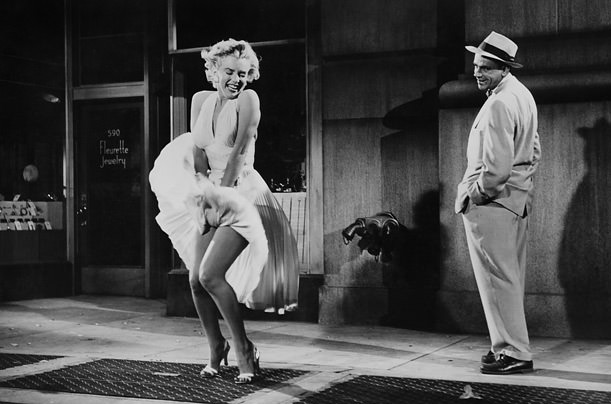 Mobile digital photography is here to stay, and unfortunately so too is bad-behavior of the adolescent-minded. Despite counter-measures, vigilance (i.e. awareness of one’s surroundings and persons therein) appears one of the most effective ways to avoid becoming a victim of the camera toting voyeurs. While we don’t advocate violence, a swift slap in the mug might also do some good.




I live in Japan and I recently purchased both a Japanese silent phone camera and ProCamera. Unfortunately, the silent phone camera takes poor quality pictures so it’s not much use. I was hoping ProCamera would have a feature for turning off the sound.
I do NOT take upskirt pictures, or downblouse pictures. However, I do use my camera to photograph people going about their usual business, although I would consider their privacy if I were to publish the pictures in any form. I also take pictures in art galleries. The sound of the shutter is obtrusive, and it turns heads. It makes people think they’re being photographed even when they aren’t. It makes you into a voyeur whether you are or not.
I also use my camera to photograph wildlife such as birds and wild boar at night. (Wild boar seem to ignore steady light, but they react to sounds.) The shutter noise is a great way of alerting animals and scaring them off.
For these reasons, I’ve developed the habit of shooting with my thumb held firmly over the speakers at the bottom of the phone. It works in most situations.
I think people who wear revealing clothing need to take their own measures if they care that much about the privacy of their various parts. And I think that makers of photography equipment and software should mind their own damn business, which is making it easy for people to take the best photographs. They should leave social manners to the discretion of the photographer.
Please add a silencer to your app so that we responsible photographers in Japan can get full value from the products that we have paid for.
Thanks for your comment Rod. We appreciate that the vast majority in Japan, S. Korea, and globally, are using their cameras ethically/responsibly and would simply like the option of silencing the shutter noise to avoid unwanted intrusion to others. This can be especially concerning in serene settings (e.g. art shows, classical music concerts, etc.) and we acknowledge such in the article. I believe it is important to note that the inability to mute the shutter noise is done during manufacturer of the iPhone for carriers in those countries wherein the governing authorities require that the shutter sound remain audible. In other words, iPhones for Japan (sold via Softbank and KDD) and South Korea (via KT) have been specially coded so that the shutter cannot be muted. For ProCamera to provide an override to that programming, would result in the prompt removal (disapproval) of our app in Japan and South Korea.
Hi Dan,
Thanks for the response.
It’s unlikely that providing silent shooting would result in the prompt removal of your app in Japan. The App Store has at least two apps that explicitly brand themselves as ‘spy cameras’ – Manner Camera and Secret Camera. They openly offer full support for furtive shooting and concealed photo storage. Complaints about their photo quality in reviews show that they’re not serious photo applications. While I have Manner Camera myself, I don’t use it because it takes grainy, low-res shots. They haven’t been promptly removed. Could Apple be sending its own message here?
ProCamera however is clearly not a quick and dirty spy application, and so if you quietly added a muting function, I think Apple would find it very hard to justify removing your app. And if they did, I for one would lambast them for it.
It would also help if makers of photography equipment wouldn’t supinely assent to the revolting ideas of people like Keio University Prof. Keiji Takeda who thinks everybody should be punished for the bad manners of a few. It’s no good simply advocating vigilance (quite right too) without also pushing back with some measured disobedience.
Hi there, thanks alot : ) for an incredibly enjoyable post,
I don’t ordinarily attach compliments but valued your blog post therefore , felt I’d personally say thank you
so much — Charlotte
Use a Nokia. It will not make noise. Forget IPhone and Android for this.
you can use an android – just turn off all sounds pre-shot taking